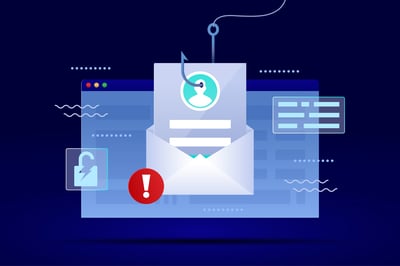
 Phishing isn’t just increasing. It’s outpacing the way many organizations test for it. Attacks have surged 400% year over year, and corporate users are now more likely to be targeted by phishing than by malware. As social engineering becomes a primary entry point into enterprise environments, how you assess phishing risk matters just as much as how often you train for it.
Many phishing programs still rely on predictable scenarios and fixed templates, even as real-world attacks become more sophisticated. Today’s phishing messages are designed to blend into everyday work, referencing familiar tools, imitating trusted senders, and arriving at moments when people are busy or distracted. In that environment, surface-level testing can miss the behaviors that quietly create risk.
Phishing simulations are most effective when they evolve alongside attacker techniques. Realistic scenarios that change over time make it possible to see how users actually behave under pressure and where habits and controls break down. As attackers increasingly use automation and AI to scale and personalize their lures, simulations also need to stay adaptive to remain meaningful.
Key Takeaways
- A phishing simulation is a safe, controlled way to test how users respond to realistic phishing tactics.
- The most effective programs follow a repeatable cycle of testing, measurement, and reinforcement over time.
- AI-powered phishing simulations help keep testing realistic, varied, and aligned with how phishing tactics evolve.
- When used consistently, phishing simulations help organizations identify risk patterns and strengthen everyday decision-making.
What Is a Phishing Simulation?
A phishing simulation is a controlled, safe test that sends simulated phishing attacks to users to measure how they respond. These simulations mimic real-world phishing techniques without exposing the organization to actual harm.
The purpose isn’t to “catch” people. It’s to understand where risk shows up in day-to-day work so you can reduce the chance that a real phish leads to compromised accounts, malware infection, or data loss.
How Do Phishing Simulations Work?
Phishing simulations are most effective for security teams when they’re run as a repeatable program, not a one-off campaign. While the setup varies by tool, most programs follow the same core steps. Here’s what that process typically looks like:
- Simulated Phishing Attacks
- User Interaction and Response Tracking
- Measurement and Feedback
Simulated Phishing Attacks
Phishing simulations deliver realistic emails, messages, or links that mirror common attacker tactics. Examples include:
- Password reset prompts
- Invoice or payment requests
- Shared document links
- HR-style updates (benefits, policy changes, and onboarding)
- Executive impersonation (“quick favor” requests)
Good simulations reflect what your users actually see, and they change over time so users don’t learn to spot “the test” instead of spotting phishing.
User Interaction and Response Tracking
To understand how users might react to suspicious emails in the real world, the simulation tracks actions such as:
- Clicking a link
- Replying to the message
- Opening an attachment
- Entering credentials on a fake login page
- Reporting the message as suspicious (the only “correct” action)
These actions give you practical insight into which types of lures trigger the most risky behavior and which groups may need extra reinforcement. Because everything is simulated, you get these insights without connecting users to real attacker infrastructure.
Measurement and Feedback
After a simulation runs, security teams review the results to identify trends and areas of risk. These insights are used to reinforce expected employee behaviors, such as recognizing common red flags, verifying unexpected requests, and reporting suspicious messages through the proper channels.
The results also help security teams decide what to test next, which follow-up training to assign, and where processes or controls may need adjustment. Over time, this feedback loop makes it easier to track progress and focus on the behaviors that have the greatest impact on reducing risk.
Why Phishing Simulations Are Critical for Reducing Risk
Six in ten data breaches involve human error, according to Verizon’s 2025 Data Breach Investigations Report. That means technological solutions aren’t enough: To protect your organization from risk, you also need to change human behavior.
In practice, simulations help your team:
- Identify human-driven risk before attackers exploit it
- Surface recurring behavior patterns that increase exposure, such as common lure types or missed warning signs
- Improve employees’ reporting habits so suspicious messages reach security teams faster
- Tune defenses and processes based on real behavior, not assumptions
- Validate whether awareness trainings actually improve behavior over time
What Are AI-Powered Phishing Simulations?
AI-powered phishing simulations use AI to adapt content, timing, and scenarios based on user behavior, a user’s job role/profession and emerging attack trends, making tests more realistic and less predictable.
The goal is to keep simulations aligned with what attackers are doing now, especially as phishing content becomes easier to generate at scale and more believable.
How AI-Powered Phishing Simulations Improve Effectiveness
Traditional simulations can become repetitive. If users start to recognize the patterns of your tests, your results may show improvement even when day-to-day phishing risk hasn’t changed.
AI-powered phishing simulations can boost effectiveness by helping you:
- Adjust difficulty over time: As users improve, simulations can make tests harder to spot by using realistic sender names, including fewer obvious errors, or tweaking messages to reference tools employees use every day. This keeps testing aligned with how real phishing attempts evolve.
- Increase variation: AI can generate a wider range of lures, language styles, and timing patterns, making simulations harder to predict. That variety helps prevent users from recognizing “the test” and instead encourages consistent scrutiny of incoming messages.
- Align testing with evolving tactics: As attackers adopt new approaches, such as AI-generated content or business email compromise scenarios, simulations can reflect those patterns rather than relying on static templates that quickly become outdated.
AI-powered phishing simulations make your results more actionable. Instead of a simple pass/fail view, you can see what’s improving, what’s stalling, and which scenarios create the biggest risk in your day-to-day environment.
How Phishing Simulations Fit Into a Broader Security Strategy
Phishing simulations are most effective when they’re integrated into a broader security strategy rather than treated as a standalone activity. On their own, they show you where risk exists. Paired with other controls, they help you reduce it.
Phishing simulations work best alongside:
- Security awareness training, to build recognition and good habits
- Email security controls, to reduce exposure to malicious messages
- Clear reporting workflows, so employees know what to do when something looks suspicious
- Strong authentication and access controls, to limit damage from compromised credentials
- Human risk management practices, to monitor trends and apply targeted interventions
Secure Your Business With KnowBe4
Phishing simulations help turn user behavior into something you can see, understand, and improve. By running real-world tests on a regular cadence, you gain clarity into where risk shows up, which scenarios are most effective, and how behaviors change over time.
That visibility makes it easier to prioritize the right follow-up actions, whether that’s targeted training, process changes, or additional controls.
As phishing tactics continue to evolve, especially with the growing use of automation and AI, keeping simulations realistic and adaptive becomes even more important.
Ready to see how phishing simulations fit into a broader human risk management strategy? Explore how KnowBe4’s phishing simulation capabilities help organizations test, measure, and reduce phishing risk at scale.