 "Someone online shows them a 'trick' that feels harmless at first. Then the community pulls them in. Everyone's doing it. It feels like skill, not crime."
That's a young person from South Africa, describing how their peers slide into cybercrime. Notice what's missing: no villain, no dark web, no hoodie. Just a skill, a community and a sense of finally being good at something.
This International Youth Day (August 12), the UN's theme is "Different Contexts, Common Aspirations," the idea that young people's realities differ, but despite the different backgrounds, what they all have in common is a want for opportunity, dignity, a place to belong. And the wish to be taken seriously for what they can do.
Cybercrime, uncomfortably, takes them seriously.
The Most Effective Youth Talent Programme in the World
In June we surveyed 238 young people across South Africa and Latin America through the Global South Cyber Academies Network (CAN), asking what draws their peers toward cybercrime. 72% said it's disguised as a normal online job. Not "come commit a crime," but a job with flexible hours, quick money, "just helping a friend," or a small paid favour. Recruitment happens on WhatsApp, TikTok, Telegram and Discord, right where young people already spend their time. Most don't realise anything is illegal until it's too late.
Strip away the criminality for a moment and look at the mechanics. This is a talent recruitment programme. It scouts early (often before age 12) and recognises skills that schools miss and offers income where the formal economy offers none. The unemployment rate for young people aged 15–24 reached 60.9% in South Africa. And then crime wraps the whole thing in status and belonging.
When Belonging Turns Predatory
Not every network competing for that belonging is "just" after money. The loose online ecosystem known as "The Com" short for "the community" including groups such as “764” show how dark this gets. It operates in the same gaming spaces and group chats where ordinary teenage life happens, and it has been flagged by both the FBI and the UK's National Crime Agency for recruiting teenagers into social engineering and cyber fraud. Its subgroups have been linked to sextortion of minors, to coercing children into self-harm and to violence offered as a service. For a lonely 13-year-old, the entry point looks identical to any other online community: attention, status, someone finally taking an interest in what they can do. That's precisely what makes these networks so dangerous: they weaponise the very aspiration this piece is about. Belonging is offered first.
Add to that the fact that many young people look at the technology we're so excited about and see their own futures shrinking; entry-level jobs automating away, an "AI armageddon" narrative on every feed, and very few adults asking them how that feels. Into that silence step the forums and the Com networks, which do ask. Which listen, flatter and offer a role.
Sometimes the criminal ecosystem is a better listener than we are.
Meanwhile, industry as well as global law enforcement is short of critical cyber skills worldwide. According to ISC2 2025 Cybersecurity Workforce study AI was the most pressing skill needed and cited by (41%) respondents, followed by cloud security (36%).
So why are we not more creative then in our skills pipeline development?
Same Aspiration, Different Label
Our survey found real regional differences: curiosity and skill-testing was rated higher in Latin America, the promise of a better lifestyle higher in Southern Africa. Attitudes were different too: in South Africa, 45% said cyber offenders are admired in their communities, versus 19% in Latin America. Different contexts, exactly as the UN theme says.
But the common aspiration underneath was identical everywhere: to earn, to matter, to belong. The tragedy is not that these young people want the wrong things. It's that they want completely ordinary things, and the illegitimate economy is often the only one offering them.
One South African respondent said: “stop treating young people in cybercrime as either monsters to be locked away or victims with no agency, start treating them as diversions of potential.”
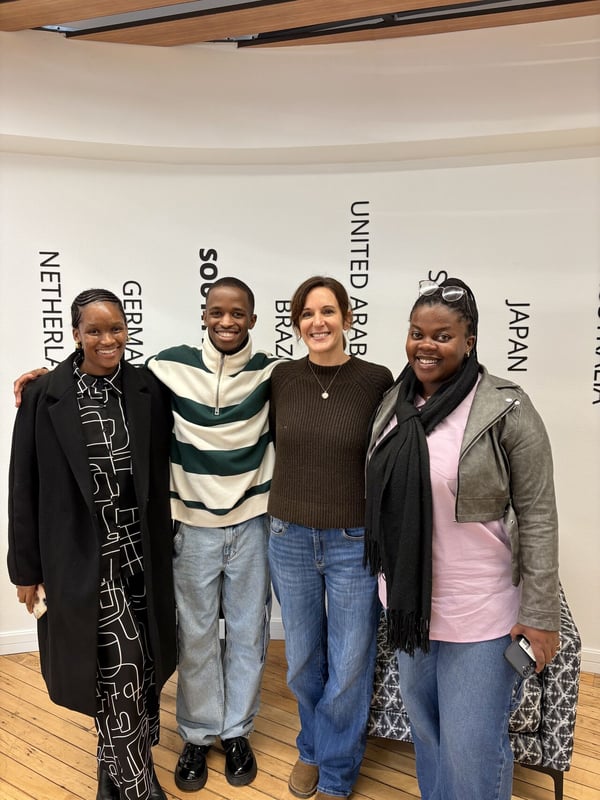
Here's what a diversion of potential looks like in practice. This survey was conceptualised and disseminated with the help of Relebohile, Lwando and Lebohang, three graduates of the MiDO Academy, the cybersecurity academy KnowBe4 co-founded with the UK government, and these three graduates are now interning at our KnowBe4 Africa office.
They set an example of young people from communities where the "hustle" pipeline actively recruits, researching that exact pipeline, as paid professionals, on the defenders' side. That's the entire argument of this piece.
And it scales: The Global South Cyber Academies network (CAN) connects like-minded academies that see cybersecurity as a pathway out of poverty and offer a place of belonging for young people such as the MiDO and Absa Academies in South Africa, IRSI in Latin America, Batuta in Mexico and CYSED in Nigeria.
Another impressive government sponsored initiative is Brazil's Hackers do Bem which provides free cybersecurity training to thousands of students with the aim to recruit them for their national cyberhub assisting individuals and SMEs with cybersecurity support.
(The full survey results and whitepaper are coming soon — watch this space.)
What this Asks of the Rest of Us
If you're a parent or teacher: the pipeline starts younger than you think, in gaming spaces and group chats, and it looks like opportunity, not danger. The best defence is a young person who can recognise the recruitment pattern and a trusted adult who takes their tech curiosity seriously before someone online does. That's exactly why KnowBe4 built CAPY, the Cyber Awareness Program for You, a free family hub with games for younger kids and straight-talking content for teens on scams, AI safety and sextortion. No logins, no fees, no barriers.
If you're an employer: hire for skill, not pedigree. Internships, apprenticeships and entry routes that don't require a degree are the legitimate economy's answer to the fake job ad.
And if you're in cybersecurity: back the academies. Every young person who enters cybersecurity through a MiDO, a CYSED or a Hackers do Bem is one the other talent programme doesn't get.
Different contexts, common aspirations. Both sides of the line are competing for this generation's talent and for its sense of belonging. Let's make sure our side makes the better offer.
Explore KnowBe4's free family cyber-safety hub, CAPY, learn more about the Global South Cyber Academies Network, and connect with Anna Collard on LinkedIn.