Lead Analysts: Prabhakaran R, Jeewan Singh Jalal
You've been saving for that watch for months.
Or perhaps you have your eyes on a long-sought-after bag you keep returning to online, or a gift for someone you want to surprise this year.
An email arrives: "[Black Friday Early Access] Luxury Products starting from $$$." The brand looks familiar. The price is far lower than you have ever seen. And the email says you are among the first to know.
Would you click?
Most people would at least look, and that is what the sender is counting on. There is no attachment and no urgent warning, only a short pitch, a brand you trust and one click. Attackers do not need to break into anything. They only need you to want a deal.
KnowBe4 Threat Lab researchers tracked this pattern from August to early November 2026. Read on for how fast it grew, which sectors received it, how one early access campaign works from email to checkout, and what to do before you click.
Key Findings
- Volume climbed well before the sale. KnowBe4 Defend saw Black Friday scam detections build from the third week of October and rise 260% in the first week of November over the week before.
- The targets were not mainly retailers. Industrial and Infrastructure organizations made up the largest share (25%), followed by Public Sector, Education, and Nonprofit (21.2%). Retail and Consumer came third at 14.4%.
- Brand names did the work. The sender name showed a well-known luxury brand, while the email address belonged to an unrelated domain.
- Redirects hide the destination. The button passed victims through intermediate websites before landing on the fake store, which can help a message slip past email gateways.
- The store was built to look legitimate. It used steep discounts, authenticity and warranty claims, free worldwide shipping, a human verification Captcha, and payment through Paypal.
- The end goal was personal and payment data. Checkout pages collected personal information and payment details, which leads to financial loss.
Why Are Attackers Starting Before the Sale Does?
Few events draw as much shopper attention as Black Friday. You expect sale emails, you look for big discounts, and you are ready to buy fast. Attackers time their messages to that calendar and place them next to real offers in your inbox.
The timing also helps them. Many real retailers now run "early access" events weeks before Black Friday, so an early access email feels normal even when no sale exists.
How Fast Did Early Black Friday Scam Volume Grow?
KnowBe4 Defend saw Black Friday scam detections rise 260% in the first week of November over the week before. Detections were a handful across August and September, began to build in the third week of October and reached their highest week so far in the first week of November, with the busiest days on the Tuesday and the Sunday of that week.
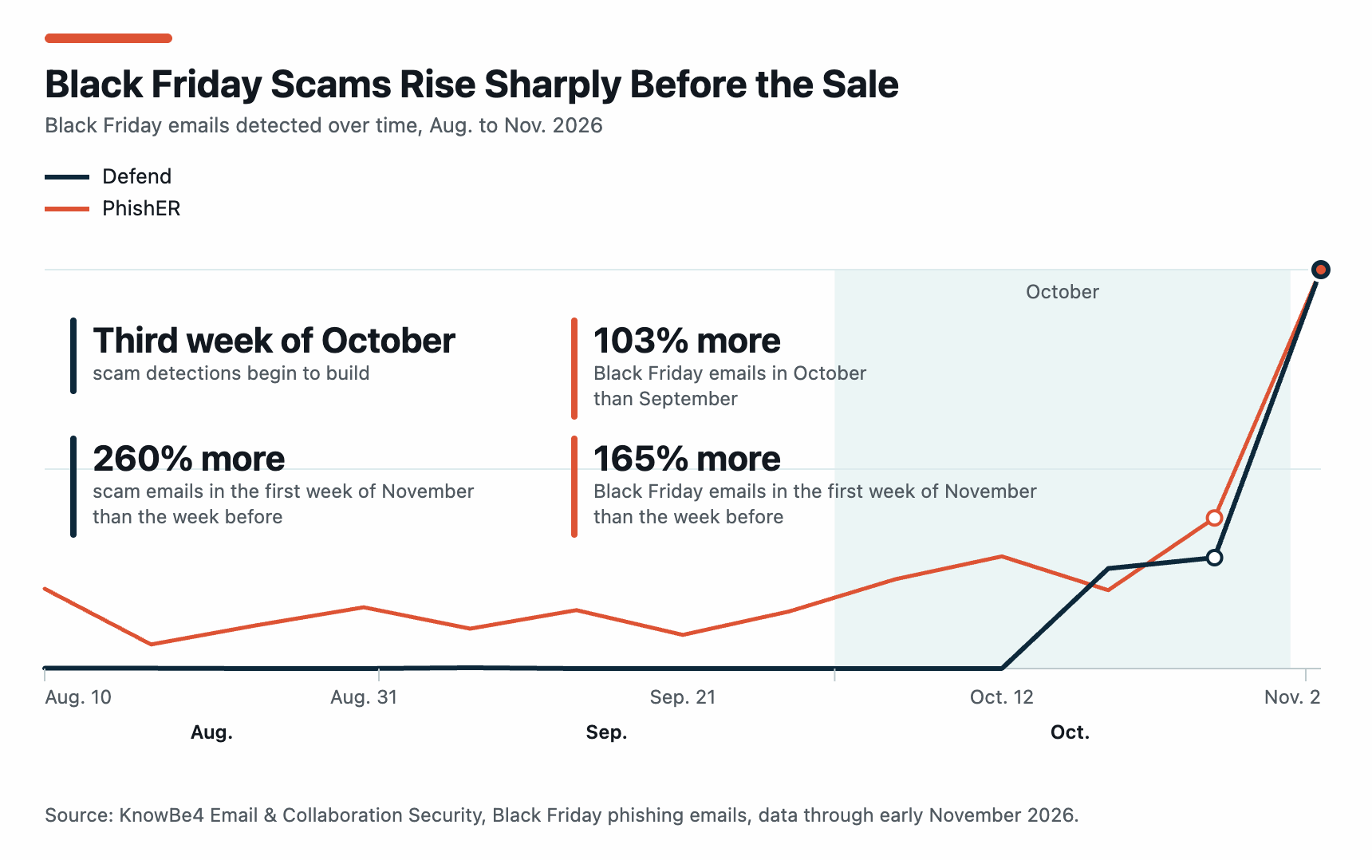
Volume gives attackers extra cover. Scam emails arrive in the same flood as ordinary retailer marketing, with the same sale subject lines, the same brand names, and the same kind of offers. Little sets them apart at a glance, so a fake offer is easy to overlook.
The PhishER Plus measure points the same way: Black Friday and holiday-sale emails were 103% higher in October than September and 165% higher in the first week of November. Against an August and September baseline, they ran about double across October and about eight times higher in the first week of November. Scam detections in KnowBe4 Email & Collaboration Security were about four times higher in the first week of November than in the third week of October.
Which Sectors Received These Emails?
These scams are not aimed at retailers alone. Industrial and Infrastructure organizations made up the largest share at 25%, followed by Public Sector, Education, and Nonprofit at 21.2%. Retail and Consumer organizations made up only 14.4%.
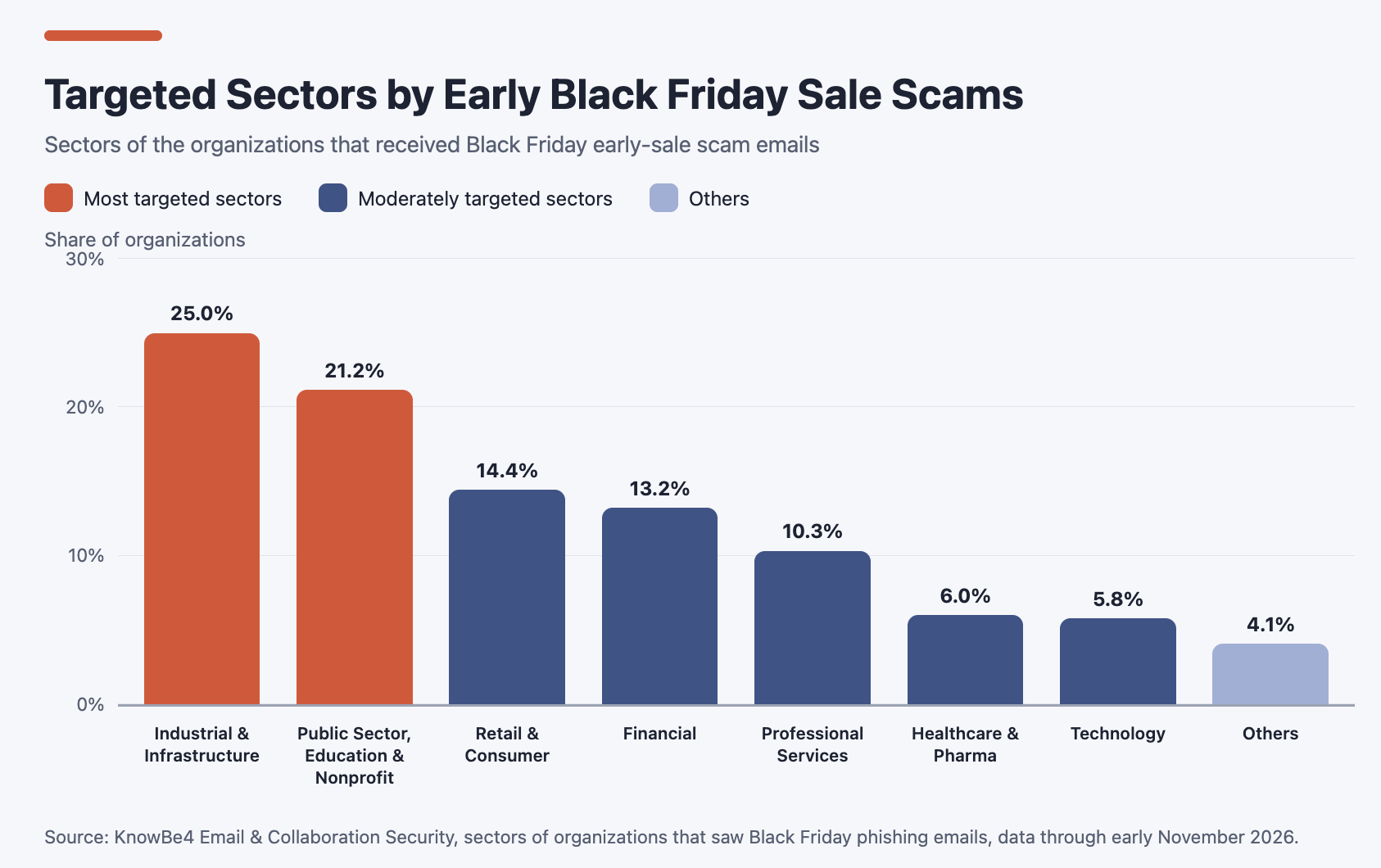
The spread shows that a sale email does not need to match your job to reach you. People in factories, government offices, and schools shop online like everyone else, and many do it from work devices and work inboxes. A scam that lands there puts your employer at risk, not only your wallet.
What Does an Early Access Lure Look Like?
KnowBe4 Threat Lab is tracking a phishing campaign that sends "early access" emails pointing to fake luxury stores. Luxury goods were the dominant lure theme. Of the scam emails in the campaigns we reviewed, about 94% were luxury goods: watches made up 43%, bags and leather goods 28%, and Louis Vuitton handbags 23%. The campaign runs in three steps.
1. The email
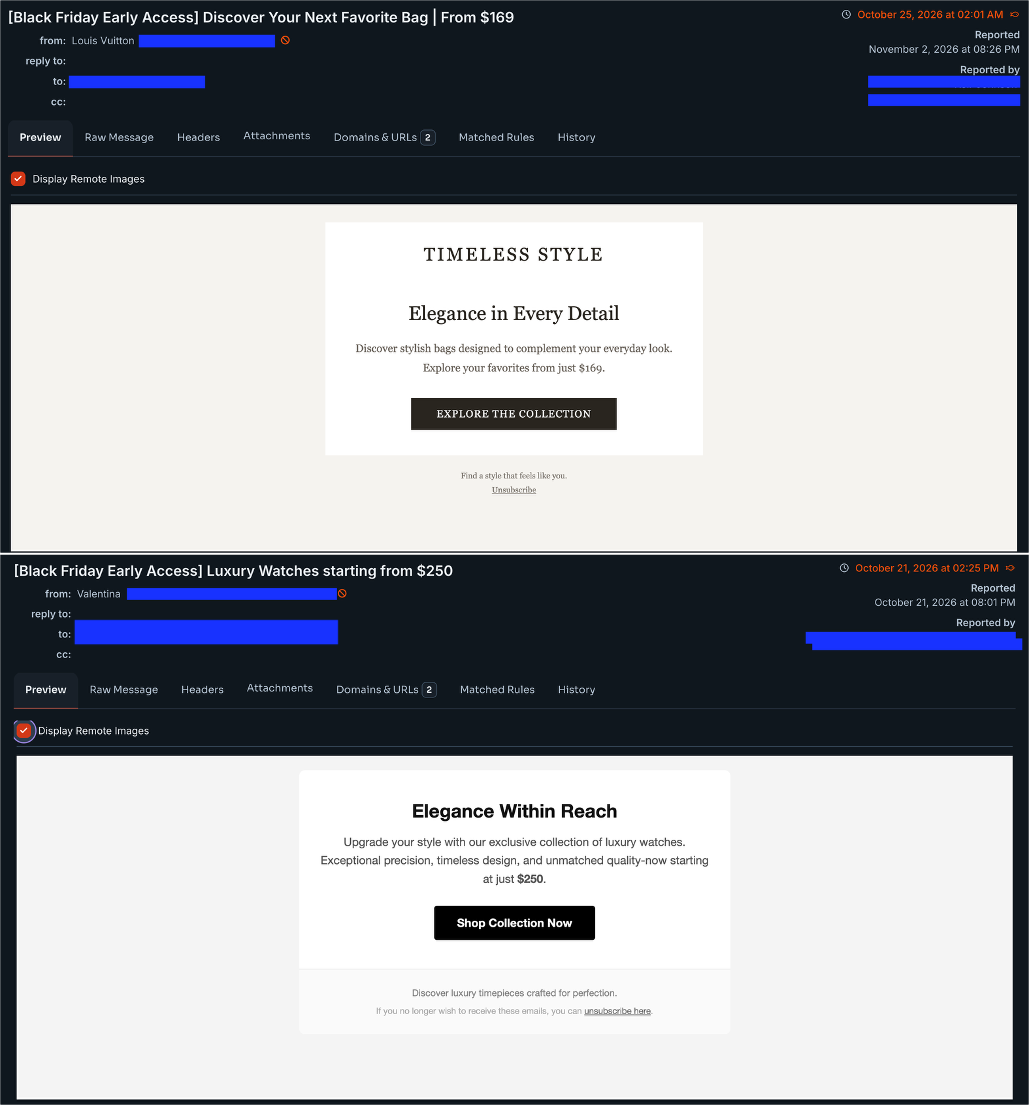
The sender name shows a well-known brand, but the email address belongs to an unrelated domain. The message is short: a brand, an offer, and a button.
Louis Vuitton was the only brand named in the subject lines. The other lures named no brand, only a product type such as luxury watches or leather bags.
2. The redirect
The button does not go straight to the store. It sends the victim through redirect links on other websites before the final page, which hides the destination from the reader and can help the message get past email gateways.
3. The store and the checkout
The final page is a polished online store. It lists unrealistic discounts and promises authenticity, warranties, and free worldwide shipping. At checkout it asks for personal information and payment details.
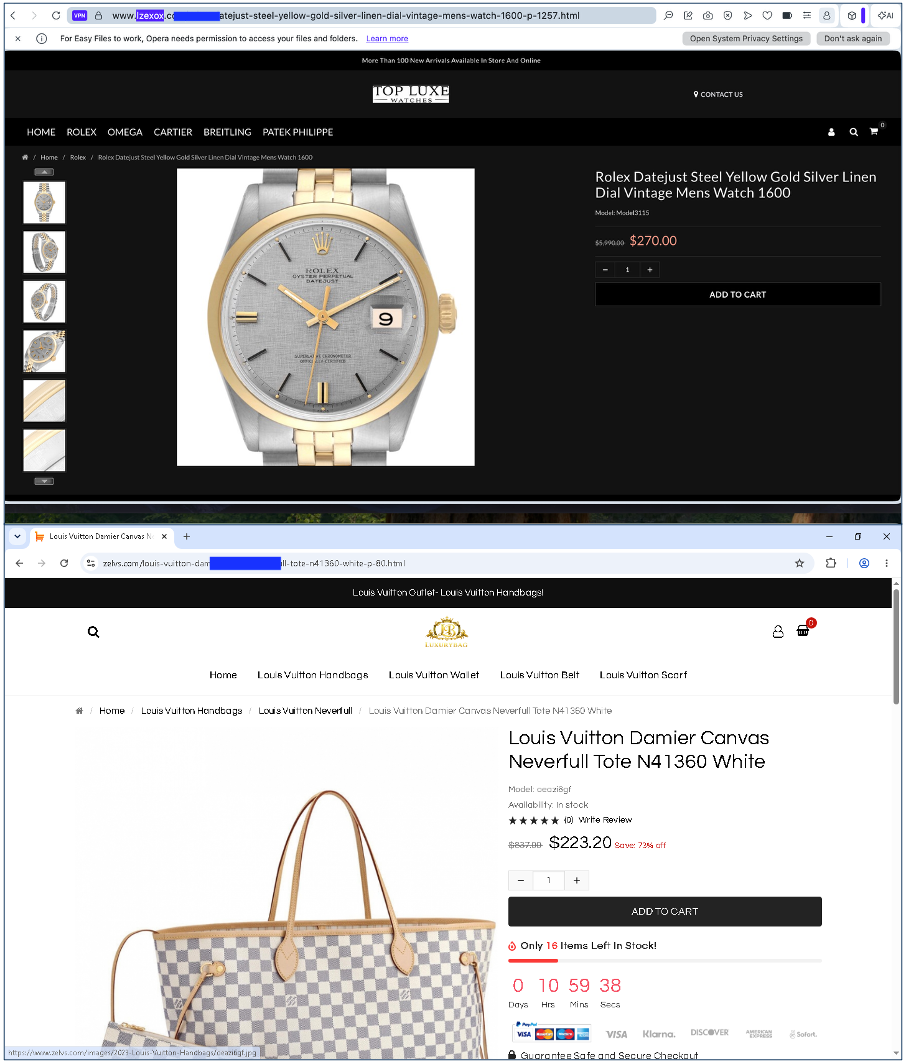
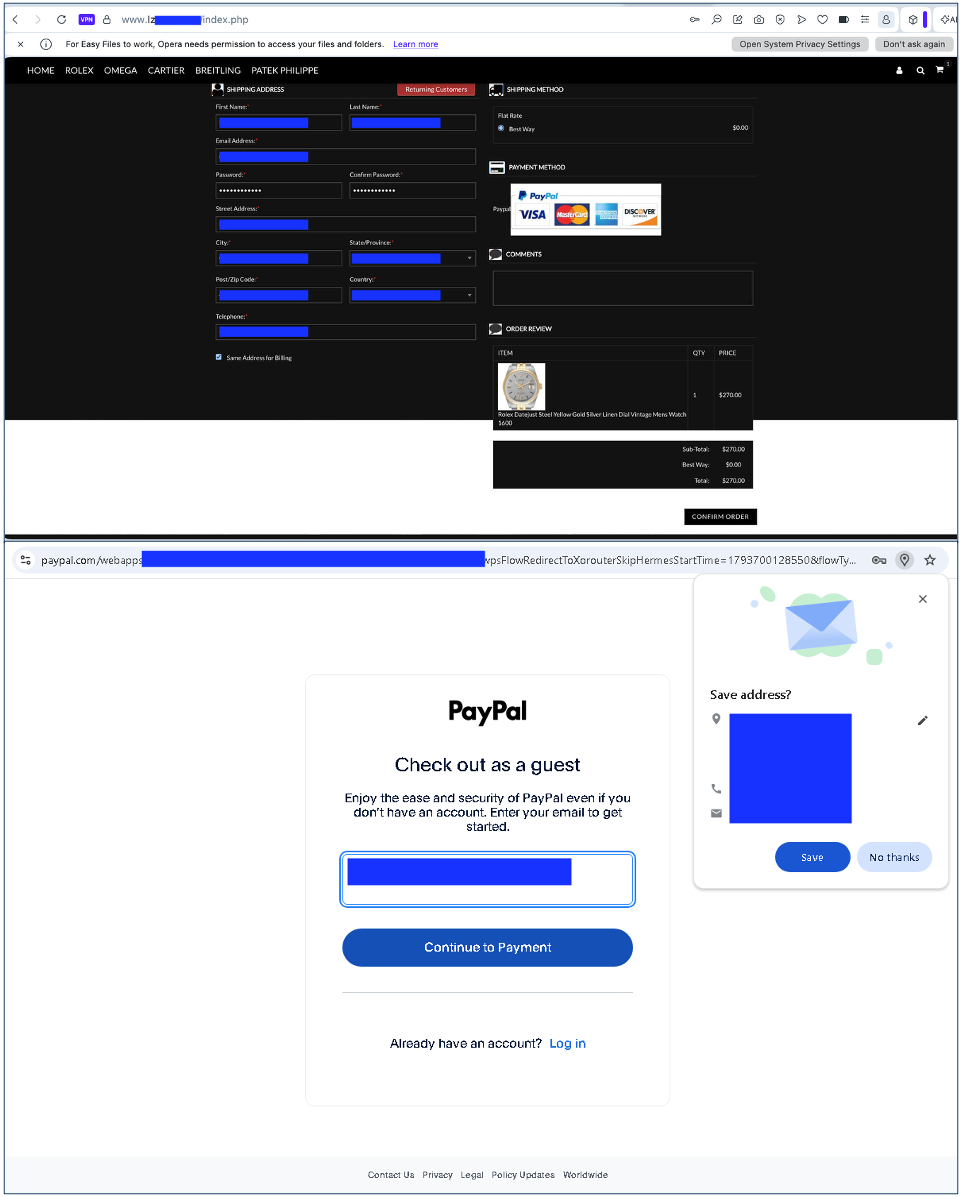
Every step feels routine. By the end, the attackers hold your personal information and your payment details.
How Does the Attack Unfold From Start to Finish?
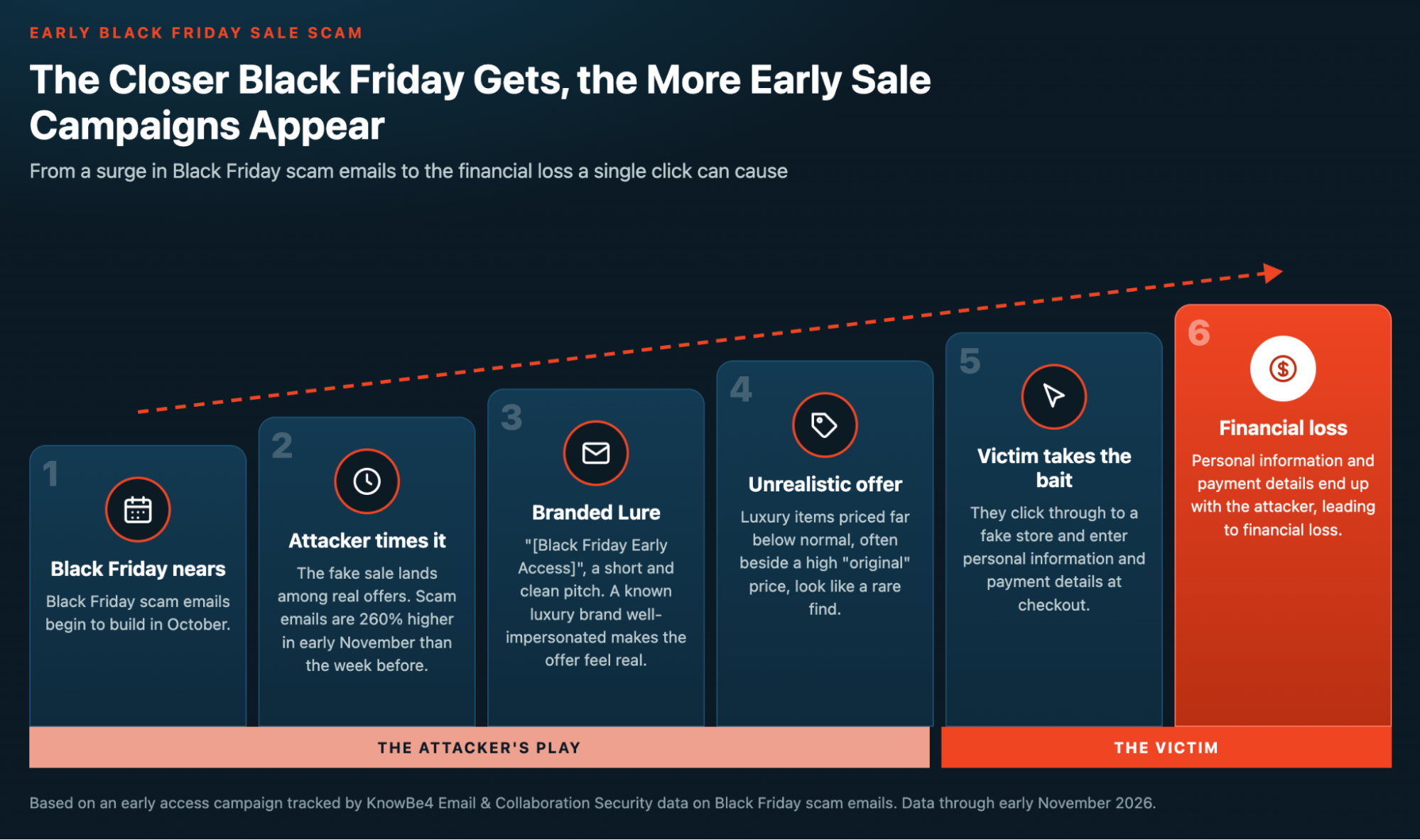
The diagram below puts the whole chain in one view. It begins with the surge in campaign emails, moves through a branded lure and an unrealistic offer, and ends in financial loss once a victim enters personal information and payment details at checkout.
Why Do These Emails Work?
They work because they speak to how people decide, not because they use advanced technology.
- A price that looks like a rare find. An unrealistic deal that makes the deal feel like luck.
- Fear of missing out. "Early access" pushes the reader to act before other shoppers do.
- Borrowed credibility. Well-known brand names and perfect impersonation make the store look real.
Each detail seems small. Together, they make you less likely to stop and question the offer.
What Should You Do Before You Click?
You can break the chain at the lure, the offer, or the checkout page, before any money moves.
- Type the retailer's address yourself. Do not use the link in the email.
- Check the sender's address against the brand it claims to be. A familiar display name proves nothing.
- Treat a price far below normal as a warning, not a bargain.
- Do not treat a payment logo as proof. A PayPal logo on a page does not make the sale legitimate.
- Report the email to your security team and enter no details.
Already shared your details? Call your bank or card issuer as soon as possible to block the card and dispute the transaction.
What can security teams do?
- Run phishing simulations and training before peak shopping periods, using lures such as early access offers and deep discounts.
- Make reporting easy, and review reported messages quickly during the weeks before Black Friday, when volume is highest.
- Remind employees that these early sales scam emails reach work inboxes too, and that the same checks apply.
Where Can KnowBe4 Help?
This campaign relies on trust: a familiar brand, an "early access" offer and a short, clean pitch. That is the layer KnowBe4 Email & Collaboration Security is designed to secure.
KnowBe4 Defend: Real-Time Behavioral AI
In this campaign, the harmful step comes after the click, when redirect links carry the victim to a fake store. Defend does not wait for a payload to appear.
Behavioral AI and natural language processing analyze inbound mail flow for the signals that give social engineering away: urgency, mismatched context, and a message that does not fit how the sender normally behaves. A well-known luxury brand name sent from an unrelated domain is one example.
These checks do not depend on file signatures or known-bad domains.
Context-Aware Warning Banners
Defend adds a warning banner directly into the email, so the user sees the alert before deciding whether to act. In this campaign, that moment comes before the click on the offer and before the checkout page asks for personal information and payment details.
PhishER Plus
Effective security needs both automated detection and users who report what they see. PhishER Plus gives employees a simple way to flag suspicious email and gives security teams a central dashboard to triage reports. With capabilities such as Global Blocklist, Global PhishRIP and automated quarantine workflows, security operations can act quickly on user-reported risk.
Security Awareness Training
KnowBe4 Security Awareness Training provides regular simulated phishing and training modules that help users spot common red flags: unrealistically low prices, sender domains that do not match the brand, and suspicious links. Running these simulations before peak shopping periods prepares your workforce for offers like this one.